
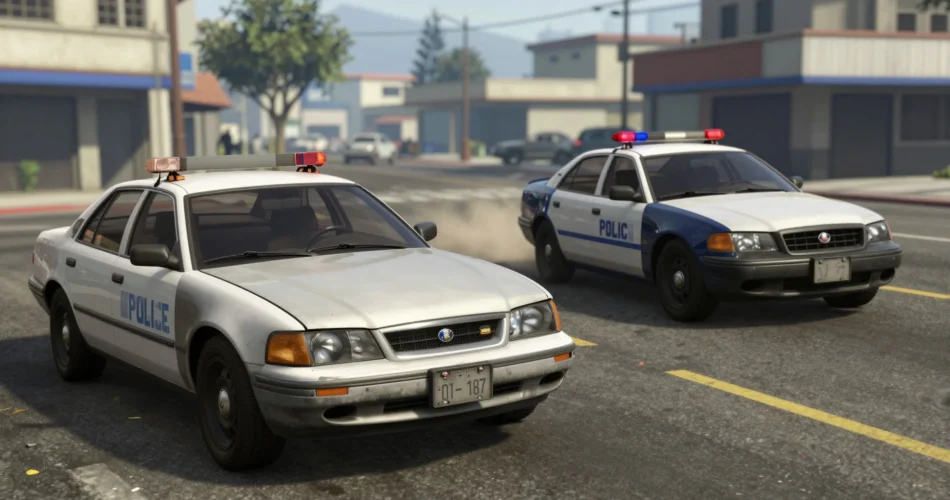
A police chase can start with one bad decision: clipping a car, stealing the wrong vehicle or turning a minor crime into a spectacular explosion. In the gameplay sequence I followed, GTA 6’s Vehicle Damage Makes Every Police Chase More Dangerous because damage is not just something to admire in a slow-motion crash. It can change how a vehicle handles, limit escape routes and force a driver to rethink their plan.
The practical lesson is simple: don’t treat your car as an indestructible escape pod. Pay attention to how it responds after an impact, notice when a tyre starts failing, and be ready to abandon a vehicle before it becomes a liability. These tips draw on what the footage showed, rather than assuming that every detail will work exactly the same in every situation. The chase feels most manageable when I plan for damage instead of waiting for the final crash.
GTA 6’s Vehicle Damage Makes Every Police Chase More Dangerous
The most useful thing to watch is how damage affects driving. In the sequence, a collision left a bumper dented, while a heavily damaged vehicle was later described as totaled. During the longer pursuit, a tyre lost air and pieces of rubber came away. The car became harder to control, turning a fast getaway into a balancing act.
That difference matters. Cosmetic damage may look dramatic without changing your immediate options, but a blown tyre can make steering unpredictable. On a straight road, you might keep moving; through a tight street or around a roadblock, the same damage can make a near miss much harder to manage. It is a bit like cycling with a soft tyre: you may still move forward, but every turn feels less reliable.
My practical tip is to check your vehicle after a major impact, not just the police behind you. If the car pulls to one side, slows sharply or starts shedding tyre rubber, stop treating speed as your only advantage. Choose a simpler route, avoid sharp turns and keep an exit in mind. The footage suggests damage can have real consequences, but it does not confirm every possible failure or repair mechanic. So, read the signs you can actually see and make decisions accordingly.
Choose a getaway vehicle for the whole chase
The quickest vehicle is not always the best escape vehicle. A fast car can create distance, but it may be harder to control after a collision. A large truck can shove through obstacles and take up space, yet its size makes it clumsy on narrow roads. In the chase, a semi-truck was powerful enough to push through some situations, but it was slow and difficult to manoeuvre.
Think about where you expect to drive. If the route is a tight downtown grid, a truck may trap you at corners or in a packed parking garage. If you are crossing open roads, a smaller car may struggle to withstand repeated impacts. There is no perfect choice: speed, toughness and handling pull in different directions.
I would also factor in the risk of getting into the vehicle. The footage showed a warning that some vehicles have security features; later, breaking into a parked car set off an alarm. That can turn a promising change of vehicle into a fresh burst of attention. Before switching cars, consider whether the benefit is worth the noise and time.
A useful rule is to choose for the next stage, not just the next few seconds. A battered vehicle that still handles predictably may be safer than a new one that is slow to access, noisy or poorly suited to the terrain ahead. Keep the route in mind and avoid assuming that any stolen vehicle will be a clean getaway.
Read damage early and change your driving
A damaged vehicle asks you to adapt. If you keep driving as if nothing has changed, small problems can snowball: a tyre loses grip, a turn goes wide, then a police unit closes the gap. In the footage, officers followed, moved alongside the player and tried to block routes. A car with reduced control has less room to recover from those tactics.
I find it useful to make a quick “keep going or get out” decision after a serious impact. If the vehicle still responds well and the road ahead is open, keep moving but drive more smoothly. Avoid unnecessary contact, especially with barriers and other traffic. If steering has become unreliable or the engine seems close to failing, start looking for a safer place to leave the vehicle rather than waiting for it to stop in the middle of a roadblock.
Be realistic about what you know. The sequence showed a blown tyre, visible rubber and loss of control, but it did not establish every repair option or exactly how each part of a vehicle behaves. Don’t bank on an unconfirmed fix. Instead, use what the game clearly presents: visible damage, sluggish movement, alarms and nearby exits.
For example, after a tyre blowout on a city street, I would favour a clear side road over a fast, weaving route through traffic. It may feel slower, but predictable movement can be more useful than raw speed when your vehicle is already compromised. The aim is to preserve control long enough to make your next choice.
Use the map to turn damage into a decision
Changing terrain can help, but it does not magically erase the danger. In the sequence, the player left a large vehicle and moved through woods and swampy ground, then used water and a boat before reaching downtown. Each change created a new possibility—and a new problem. Open ground gave the helicopter a view; swimming brought an environmental hazard; a slow boat remained vulnerable to pursuing police boats.
The same trade-off applies to city streets. Buildings and parking structures can interrupt a helicopter’s view and offer routes that are unavailable on the road. But they can also become traps. Police searched a parking garage, and officers covered its exits. A damaged car may be particularly awkward in a tight ramp or crowded structure, so don’t head inside without considering how you will leave.
When your vehicle is failing, look at the map in practical terms. Is there a wide road where you can keep control? A side street that avoids a bottleneck? A building with more than one way out? A route to water that you can actually use safely? These are better questions than simply asking which direction is shortest.
A real-world comparison helps: if a car breaks down in a busy area, the nearest exit is not always the safest one. You want room to stop, visibility and a clear next move. In-game, too, a route that preserves options may be more valuable than a dramatic shortcut. Terrain is a tool, not a guarantee.
Stay alert to wanted levels, searches and visibility
A pursuit is not always a straight line from crime to police chasing your exact vehicle. In the footage, officers first investigated the explosion scene. The player had a chance to move before police began a direct pursuit. Later, ground units, roadblocks and a helicopter made escape harder. This difference between investigation and active pursuit matters: authorities may know something happened before they know exactly where you are.
That gives you a practical window to make a plan, but not a reason to dawdle. If you have damaged your vehicle near the scene of a crime, staying there can make it easier for police to find you. Moving to a new area may help break direct contact, but a visible weapon, a distinctive vehicle or a repeated route could still give you away. The footage showed the player consider dropping a large weapon and changing clothes; it did not prove that either action guarantees escape.
I would use a short routine: check the vehicle’s condition, identify the nearest open route, and decide whether to continue driving or leave it. If you switch to foot travel, use cover to interrupt sightlines, but keep moving towards a place with multiple exits. Listen for sirens and watch for units rather than assuming quiet means the search is over.
The strength of the wanted system is how these details interact. Vehicle damage affects mobility; police tactics affect route choice; and visibility affects how long you can stay unnoticed. If one part of the plan fails, change the plan rather than doubling down.
FAQs
Does vehicle damage affect how a car handles?
In the sequence, a damaged tyre made the vehicle harder to control, and the damage was visible. The footage supports that practical takeaway, though it does not confirm every possible effect for every vehicle.
Should I always choose the fastest car for a chase?
No. Speed helps on open roads, but handling, durability and the route matter too. A fast car that becomes difficult to control may be less useful than a slower vehicle that suits the terrain.
What should I do after a tyre is damaged?
Avoid sharp turns and unnecessary collisions, then reassess your route. If the car feels too difficult to control, look for a safe opportunity to leave it rather than waiting for it to fail completely.
Can a large truck help me escape?
It can push through some obstacles, as the footage showed, but a truck is less nimble and slower than a smaller vehicle. It may be a poor choice in narrow streets or a crowded garage.
Do buildings guarantee that I can lose the police?
No. A building may interrupt direct sightlines, but officers can search inside and cover exits. Treat interiors as possible cover, not a guaranteed hiding place.
How can I tell when a pursuit is no longer active?
Listen and look for signs such as nearby police units, sirens or continued searching. A quiet moment may mean you have broken direct contact, not that every trace of police attention has disappeared.
Conclusion
The biggest lesson is to treat damage as information. A dent may be a warning; a failing tyre can change your whole route; and a large vehicle may trade toughness for poor handling. Check how your vehicle responds, choose roads that leave room to manoeuvre and keep an exit in mind before entering a building or changing terrain. Most importantly, do not assume that speed alone will solve a pursuit. When GTA 6’s Vehicle Damage Makes Every Police Chase More Dangerous, the smartest escape is the one that adapts before a damaged vehicle makes the decision for you.

