
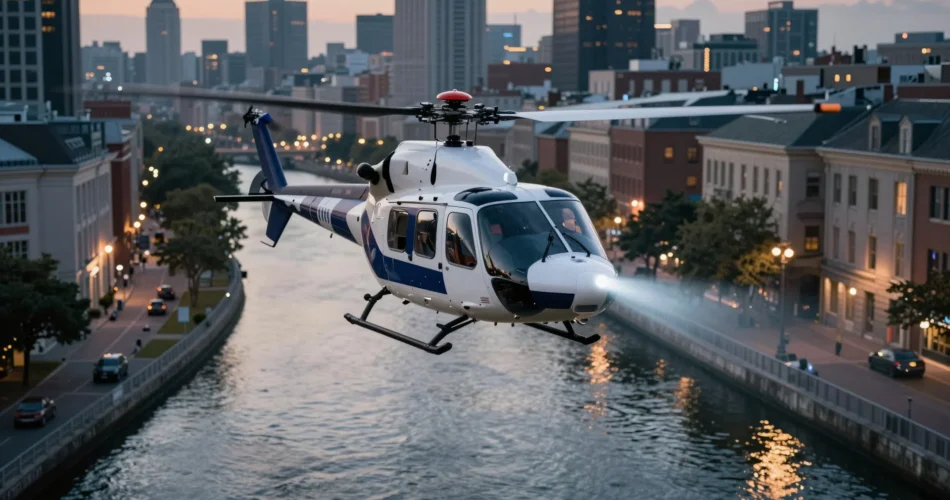
A helicopter overhead can make a police chase feel impossible to escape. You can leave the road, ditch your car and slip into a new area, yet that aircraft may still be circling above you. So, Can a Helicopter Find You Anywhere in GTA 6? Not necessarily. The chase footage suggests that helicopters add a powerful aerial search, but they do not make every hiding place useless. Your route, cover and timing still matter.
I found the most useful lesson is to think beyond simply driving faster. Police attention can shift from a direct pursuit to a search, and each change in terrain brings new risks. A helicopter can watch open ground, while buildings, trees and other obstructions may break its view. But losing sight of you is not the same as erasing your last known location. Here is how to make better decisions when the rotor noise starts getting closer.
Can a Helicopter Find You Anywhere in GTA 6?
A helicopter can make it harder to escape, but the demonstration does not show it detecting the player everywhere, all the time. During the chase, an aircraft followed the player over roads and water. When the player left a vehicle and moved through rough terrain, hiding became a matter of using cover and avoiding open spaces. The footage also shows the player trying to dive underwater when the helicopter was nearby. These moments suggest that aerial surveillance is a serious threat, not a magical tracking system.
That distinction matters. In a real-world search, an aircraft has a broad view, but buildings, trees, terrain and poor visibility can obstruct what a crew can see. A game can model similar limitations, though its precise rules may differ. The footage does not confirm an exact search radius, how long a helicopter remembers your location, or whether every kind of cover blocks detection.
My practical rule is to treat the aircraft as a warning that your last location is exposed. Don’t keep sprinting across open ground and hope it loses interest. Break line of sight, move towards a covered route, and avoid doubling back into the area where police last saw you. The GTA 6 helicopter is most dangerous when you give it a clear view and an easy route to follow.
How line of sight and wanted levels shape an aerial search
A wanted level is more than a reminder that you have broken the law. It signals that police have become aware of you, while the response can develop as officers investigate, gather information and try to locate you. In the footage, a major explosion brought a three-star wanted level and emergency responders to the scene. Police initially focused on investigating the incident. The pursuit became more direct as the player’s later actions made their location easier to identify.
That delay creates a useful opportunity. If you break visual contact, the helicopter may no longer be able to follow your exact movements, but ground units can still search around the last place you were seen. Think of it like leaving a busy road after a near miss: you may be out of view, but anyone looking for you will check nearby streets and obvious exits.
I watch for the difference between an active chase and a search. If the helicopter is circling directly overhead, assume you are still visible or that police are checking the area. If it moves away, that may give you breathing room, not a guaranteed clean escape. Keep cover between yourself and the aircraft, and use the gap to change position rather than stopping nearby. Also remember that a visible weapon, stolen vehicle or fresh crime can make you easier to recognise or relocate. Don’t create new clues just as the search begins to cool down.
Five practical ways to break visual contact
When an aircraft is above you, choose a route that interrupts its view instead of simply choosing the shortest route. In the chase, the player moved between a vehicle, wooded terrain, water and city buildings. Each option created an opportunity to break contact, but each also introduced a risk. A vehicle can get you out of an exposed area quickly; on foot, you can use smaller paths and cover that a large vehicle cannot reach.
Try these practical steps:
- Use solid cover. Head for buildings, dense trees, bridges or enclosed routes that can block the helicopter’s view.
- Move away from your last known position. Don’t hide right beside the vehicle or scene that drew police attention.
- Avoid open ground. Fields, wide roads and open water leave you easy to spot.
- Change your movement pattern. Turn onto a different route once you are out of sight instead of travelling in a straight line.
- Keep an exit in mind. A hiding place is only useful if you can leave without running straight into officers.
I treat a change of terrain as a trade-off, not a guaranteed escape trick. Swimming can separate you from road units, but it can expose you to aerial observation, boats or environmental hazards. A building can block a helicopter’s view, but police may search its entrances or parking levels. Pick cover that creates a next move, not just a temporary pause.
Choose your escape route for the terrain
The best escape depends on where the chase is happening. On a road, a damaged vehicle might be more trouble than it is worth. In the footage, police fire damaged a tyre, making the vehicle harder to control. A slow, heavily damaged car is a poor choice for an exposed highway, even if it has already carried you a long way. I would look for a safe moment to leave it and continue on foot, but only if there is nearby cover and no clear view from above.
In wooded or swampy areas, smaller paths can help you avoid the road network. Watch for hazards and don’t assume that thick vegetation means you are invisible. Near water, consider whether you have a safe landing point and whether a boat could expose you to another pursuit. The player in the demonstration stole a boat, but police boats joined the chase, and the chosen craft was slow.
Downtown offers more obstacles and route options: buildings, parking structures, alleys and covered entrances may interrupt aerial sight. However, the footage also shows police searching a parking garage and blocking exits. That is the downside of urban cover: it can conceal you from above while narrowing your escape routes. Before entering, look for more than one way out. If you hear officers inside or see vehicles blocking the exit, don’t wait until the trap closes to change plans.
Common helicopter-escape mistakes to avoid
The easiest mistake is to assume that out of sight means safe. After leaving the truck, the player tried using woods and water to break contact, but the helicopter remained part of the threat. Later, in the city, a parking structure offered cover from above, yet police entered and searched it. These examples show why concealment is a process: you need to break the aircraft’s view, move away from the search area and avoid leading officers to your hiding place.
Another mistake is staying with a vehicle that has become a liability. A blown tyre, alarm or damaged engine can make a car loud, slow and difficult to steer. A large truck may push through obstacles, but it is awkward in tight streets. A boat may get you off the roads, but it can be conspicuous and slow. Choose mobility that suits the next part of the route, not just the one you have already travelled.
Finally, don’t keep committing crimes while trying to disappear. Stealing another vehicle, firing a weapon or returning to the scene can give police fresh information. In the footage, the player considered dropping a visible weapon and changing clothes. Those actions may help reduce obvious clues, but the demonstration does not prove exactly how much each one affects detection. My advice is simple: once you have cover, stop escalating, listen for police and plan a quiet route away from the last known position.
FAQs
Can the police helicopter see me through buildings?
The footage does not establish exactly what the helicopter can see through. Treat solid buildings as useful cover from direct view, but remember that ground officers may still search inside or around them.
Does hiding underwater make me invisible to the helicopter?
It may interrupt direct visual contact, but the demonstration does not confirm that underwater hiding guarantees safety. Boats, nearby officers and environmental dangers can still complicate an escape.
Should I abandon my car during a helicopter search?
Only if the vehicle is damaged, exposed or easy to track and you have a safer route nearby. Leaving it can help you use smaller paths, but you may be vulnerable on foot.
Are city buildings the safest place to hide?
They can block aerial sight and offer several routes, but they are not automatically safe. Police may search entrances, stairs or parking areas, so plan an exit before going inside.
Does changing clothes remove the wanted level?
The footage shows the player considering an appearance change, but it does not confirm that changing clothes clears a wanted level. Treat it as a possible way to alter your appearance, not a guaranteed reset.
What should I do when the helicopter circles overhead?
Break line of sight with solid cover, move away from your last known position and avoid crossing open areas. Then choose a quiet route with more than one exit.
Conclusion
A helicopter can turn an ordinary chase into a search across roads, water and city blocks, but the footage does not suggest that escape is impossible everywhere. Your best tools are cover, timing and a route suited to the terrain. Break direct sight, move away from where police last saw you, and think about what ground units can do next. A building or patch of trees may buy time, but you still need an exit. Stay mobile, avoid fresh crimes and treat every change of environment as a trade-off. That is how you turn helicopter pressure into a more manageable escape.
